
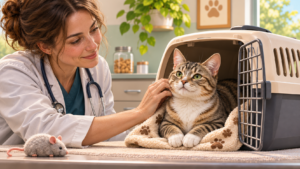
Does your cat vanish the moment the carrier comes out of the closet? One minute everything is peaceful, and the next you’re trying to convince a very suspicious cat that a trip to the veterinarian is a perfectly reasonable idea.
Cats are creatures of habit. A carrier, a car ride, unfamiliar smells, and a waiting room can feel like a lot all at once. Fortunately, a little preparation at home can make the experience easier for both you and your cat.
Make the carrier part of everyday life
If the carrier only appears on appointment day, your cat may learn to associate it with something stressful. Try leaving it out in a quiet, familiar room with the door open. Add a soft blanket that smells like home and let your cat investigate when they’re ready.
Start small. Reward a curious sniff or a step toward the carrier with gentle praise, play, or a favorite treat. Over time, your cat may feel comfortable walking inside. Patience matters, especially for adult and senior cats who have already had unpleasant trips.
Choose a carrier that feels secure
A sturdy, well-ventilated carrier with a removable top or top-opening door can make veterinary exams easier. It should be large enough for your cat to stand, turn around, and lie down comfortably.
For households with more than one cat, use a separate carrier for each cat. Even cats who get along beautifully at home may feel uneasy when confined together during travel.
Plan a calmer car ride
Before leaving, place familiar bedding in the carrier. A light towel over part of the carrier may help reduce visual distractions, as long as there is plenty of airflow and your cat seems comfortable with it.
Keep the carrier stable during transportation. The floor behind a front seat is often recommended for a secure carrier; follow the carrier manufacturer’s safety guidance. Carry it close to your body with both hands so it doesn’t swing while you walk.
Drive gently, keep music low, and avoid rushing. If possible, take a few short practice trips on another day so every car ride doesn’t end at the vet.
Let the veterinary team know what your cat needs
If your cat becomes very frightened, call the clinic before your appointment. Ask whether they offer quieter appointment times, a separate cat waiting area, or the option to wait in your car until an exam room is ready.
Tell the team what makes your cat more comfortable. Some cats prefer to stay in the bottom half of a carrier during an exam. Others need extra time to settle. For cats with severe travel anxiety, your veterinarian can advise whether prescription calming medication is appropriate. Never give your cat a human medication or sedative without veterinary direction.
Give your cat time to decompress afterward
Back at home, offer a quiet spot, fresh water, and access to their usual resting places. Some cats settle in quickly; others need a little distance before they feel like themselves again.
If you have other cats, you may notice extra sniffing or even hissing because the returning cat smells different. Give everyone space and let them reconnect gradually. Contact your veterinarian if you notice ongoing distress, illness, or unusual behavior after the visit.
A simple checklist for appointment day
- Check that the carrier door and latches are secure.
- Bring familiar bedding and an extra towel.
- Ask the clinic in advance whether your cat needs to fast for a procedure. Do not withhold food unless instructed.
- Keep the carrier steady, ventilated, and comfortably cool.
- Tell your veterinary team about any fear, pain, or handling concerns.
Small steps really do help
Your cat may never become a fan of the veterinary clinic, and that’s okay. The goal is to make necessary care feel safer and more predictable. Sometimes progress looks as simple as a cat who no longer runs away when the carrier appears. That’s worth celebrating.
Helpful resources
For more ideas, see the American Animal Hospital Association’s guide to calmer vet visits and FelineVMA’s cat transportation guidance.
This article is for general pet-care education and does not replace advice from your veterinarian.