
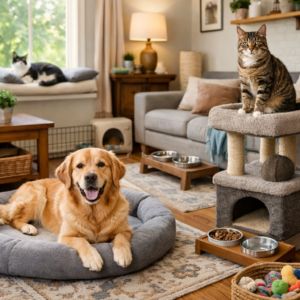
 Living with both dogs and cats teaches you pretty quickly that they experience the same house in completely different ways. Dogs live where we live. Cats live everywhere else too. One prefers the floor, the other prefers height, and somehow we try to make it all work under one roof.
Over time I realized a peaceful home with pets is less about training and more about setup. When the environment works for them, most problems quietly disappear on their own.
Dogs and Cats Use Space Differently
Dogs like connection. They want to know where their people are, follow familiar paths through the house, and settle near daily activity. Even when they are resting, they usually want to be close to life happening around them.
Cats are different. Cats like options. They want to observe, retreat, climb, and decide when they participate. A cat that feels trapped or cornered is not a happy cat.
Once I started looking at my home through their eyes instead of mine, small changes made a big difference.
Furniture Placement Matters More Than You Think
Furniture controls how pets move through a home. I used to arrange things purely for appearance, but pets care about flow, not design.
Dogs need clear walking paths. When spaces feel crowded, dogs bump into things, startle cats, or become restless because they cannot move comfortably from room to room.
Cats need elevated places that belong to them. A chair by a window, a perch near the couch, or a cat tree beside everyday activity lets them feel included without feeling overwhelmed.
One thing I learned is to avoid placing cat resting spots where a dog can accidentally block the exit. Cats relax when they know they can leave whenever they want.
Sometimes moving one chair completely changes the energy in a room.
Every Pet Needs a Safe Zone
Each animal benefits from having a place that feels like theirs.
Dogs often choose a bed near the family because they like companionship. That predictable resting spot helps them settle instead of constantly pacing or following everyone around.
Cats need at least one area where they can fully relax without interruption. Usually that means somewhere elevated or slightly removed from busy traffic areas.
These spaces are not about separating pets. They give everyone a chance to reset. When pets know they can retreat, they rarely feel the need to compete.
I notice this especially with older pets. They appreciate quiet more than they used to.
Feeding Areas Can Change Everything
Food is where many multi-pet households run into trouble.
Dogs are usually very interested in everyone’s meal. Cats prefer peace and privacy while eating. Feeding them side by side often creates tension without us realizing it.
What works best is simple separation. Cats often eat better when their bowls are raised or placed in an area dogs cannot easily reach. Dogs feel calmer when their feeding spot stays consistent every day.
Routine removes stress. Everyone learns where food happens and stops worrying about losing it. We feed the dogs in the kitchen behind the gates and the cats eat in the main room up on chairs or tables. It works well at home.
Thinking About Traffic Flow
I never thought about traffic flow in a home until I watched how my pets moved through it.
Doorways, hallways, and kitchens become busy intersections. Dogs get excited when people move around. Cats sometimes just want to pass quietly without being noticed.
Adding a perch near a busy area gives cats a way to observe from above. Moving a dog bed away from constant foot traffic helps dogs rest more deeply.
Even small changes reduce those little moments of tension we barely notice but pets feel all day long.
Balancing Different Energy Levels
Dogs and cats rarely share the same activity schedule. In my home I notice that the dogs are energetic during the day playing around but cats are more zoomie in the morning or in the evening.
Dogs benefit from structured activity like walks and predictable playtime. Cats prefer short bursts of play followed by long stretches of rest.
When dogs have an outlet for energy, they are less likely to chase. When cats have regular play sessions, they feel more confident and relaxed.
It does not need to be complicated. A walk for the dog and a few minutes with a wand toy for the cat can change the entire mood of the house.
Making Adjustments for Aging Pets
As pets get older, the home sometimes needs to change with them.
Senior dogs may need clear walking paths and softer places to rest. Senior cats often appreciate lower jumping options and warm, quiet sleeping areas.
I have learned that aging pets thrive when their environment stays predictable. Familiar furniture placement and easy access to favorite spots help them feel secure.
Little adjustments can make everyday life easier without us even noticing.
A Home That Feels Peaceful for Everyone
A pet-friendly home is not about perfection. Mine certainly isn’t. It is about paying attention. Where do they naturally choose to sleep? Which spots make them comfortable? What areas seem stressful?
Dogs want closeness. Cats want choice. When both needs are respected, harmony happens almost naturally.
Some of my favorite moments are the quiet ones. A dog stretched out nearby. A cat watching from a sunny perch. Coffee in hand. Everyone settled.
That is when you realize the home is working. Not because it looks perfect, but because everyone living in it feels safe, calm, and exactly where they belong.
If this helped you and your pets, feel free to bookmark The Happy Healthy Pet Guide or check back soon for more cat and dog care tips.